
Lund – a thousand years of innovation
Innovation can take many forms – from technological and scientific breakthroughs that improve the human condition to everyday ideas that simply make life better. Through this exhibition, visitors are invited on a journey through the past thousand years of one of the world’s most idea-rich cities.
Together with Kulturen in Lund, we have created an exhibition to celebrate the remarkable city we are proud to be part of. In everyday life, it is easy to overlook what makes Lund such a unique centre of innovation. Yet, over the centuries, the city has repeatedly demonstrated an extraordinary ability to generate ideas, knowledge and entrepreneurship that have shaped society far beyond its borders.
The exhibition, with screens currently displayed on the Inspira Gallery Wall at Medicon Village, will remain on display until August before touring public locations across Lund. Our ambition is to give as many people as possible the opportunity to discover the people, ideas and innovations that have helped shape the innovation cluster we know today.
The Viking king takes a selfie
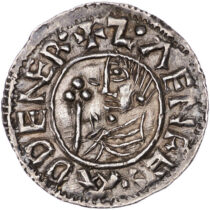
Sven Tveskägg was the first Danish king to mint coins on a large scale. This took place around the year 995, most likely in Lund. Earlier Danish kings had minted coins, but Sven introduced a number of innovations in his. He placed a portrait of himself on the coin, above his name, thereby becoming one of the first Nordic royals in a thousand years to have his face depicted on currency.
The purpose was, of course, not primarily to provide the country with money – most people still relied on barter – but rather to promote himself. Sven realised that the coin was the most effective medium through which to market himself, and he exploited its potential as a social medium.
Was he the first to do so? Well, there was one Olof Skötkonung, king of the peripheral realm of Sweden, who appears to have started doing something similar at roughly the same time. But here in Lund, we side with Sven …
Hamlet – a native of Lund?
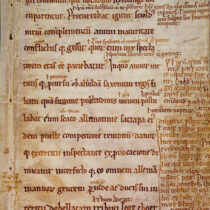
The story of Hamlet is one of the world’s most famous and influential tales. And of course, it was written in Lund!
Well, no – as far as we know, William Shakespeare never visited Lund. But then again, he was not the one who originally invented the story of Hamlet either.
Its earliest known version was written by Saxo Grammaticus, secretary to the Danish Archbishop Absalon.
Around the year 1200, Saxo authored the monumental work Gesta Danorum, a history of Denmark. He frequently embellished his stories in order to create the image of a strong and ancient kingdom.
One of the tales recorded in the work was that of Prince Amleth, son of a chieftain from Jutland. His father was murdered by his own brother, and Amleth pretended to be insane in order to survive, before eventually taking revenge on his uncle – precisely as happens in Shakespeare’s tragedy.
Saxo’s version of Hamlet is the oldest surviving one. And Saxo was based in Lund when he wrote it.
Thoughts on equality, circa 1398
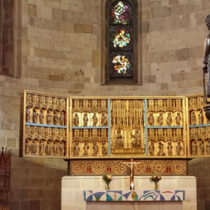
Ide Pedersdatter Falk was the daughter of a Danish knight. Through two strategic marriages, she became one of the largest landowners in Skåne during the 14th century. As a widow, she became one of the most powerful women in the region – and perhaps one of the Middle Ages’ most interesting progressive thinkers.
When writing her will, she did something that almost no one else did at the time. She left gifts to her servants – particularly the women, each of whom received a bed, bed linen, and enough money to purchase a home of her own. Unmarried women received more than married ones, and the will was designed to provide security in a time that was uncertain and precarious for women in domestic service.
In the same will, she donated the altarpiece pictured to Lunds cathedral, the largest of its kind in Sweden. It still stands beside the altar today.
The first Nordic higher education
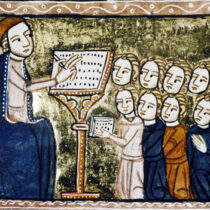 In 1438, the Franciscan monastery in Lund established an institution of higher learning. A so-called studium generale was created, where monks could study theology and earn a degree roughly equivalent to today’s bachelor’s degree.
Unfortunately, very little is known about this institution. However, during archaeological excavations, the seal of the lector was discovered, depicting him behind the lectern with his students seated before him. This marked the first stage in a development that would eventually lead to the founding of Lund University, as well as centuries of theological debate and intellectual exchange.
This was the first institution of higher education in the Nordic region, and clear proof of the status Lund held during the Middle Ages – it was simply self-evident that such an institution should be located here.
Sweden’s first barista
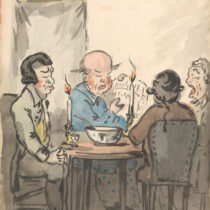 When Karl XII returned to Sweden after many years of warfare in the Ottoman Empire, he established his headquarters in Lund, where he remained for almost two years.
During their time in what is now Turkey, many of his men had acquired a new habit – drinking coffee. In this way, the beverage was introduced to Sweden, although it took time before the population embraced the novelty.
Among those who arrived in Lund with the king was his brother-in-law, Count Frederick of Hesse, who brought with him a Jewish coffee cook from Poland named Markus Markovitz. This Markus is, quite literally, Sweden’s first known barista. And it was in Lund that coffee drinking first began to gain popularity among the city’s more affluent residents. It has remained popular ever since – and Markus Markovitz has had many successors.
Swedish silk – nothing ventured, nothing gained?
 In the 18th century, silk fabric was one of the most sought-after luxury goods in Europe. However, production took place abroad, making silk expensive to import. As a result, discussions began about whether it might be possible to establish silk production in Sweden.
One of those with particularly ambitious plans was Eric Gustaf Lidbeck, Professor of Natural History in Lund. Beginning in 1756, he initiated the planting of 50,000 mulberry trees at Paradislyckan, the university’s cultivation area north of Lundagård. The leaves of the white mulberry tree are the primary food source for silkworm larvae, and Lidbeck hoped the trees would allow silk production to flourish.
At first, the trees grew well, but protecting them proved difficult. Townspeople allowed their pigs to roam and root around the area, and during the winters people arrived to cut down trees for firewood. Eventually, harsh winters destroyed the plantation altogether. By then, however, some silk had in fact been produced, parts of which were even sent to the king!
What would the world be without a few slightly crazy ideas?
Source criticism 200 years before Facebook
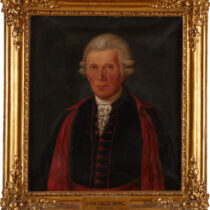 During the Age of Enlightenment, a researcher based in Lund became a pioneer of what would later come to be known as source criticism. Sven Lagerbring was one of Sweden’s first professional historians. More than anyone before him, he emphasised the importance of using sources created as close in time as possible to the events they described. He travelled extensively in search of documents that could best illuminate the past and provide a more truthful account of what had happened.
In doing so, he helped transform history from an art form into a science, and ultimately contributed to laying the foundations for the source criticism that is so crucial in today’s media landscape. At the same time, he stressed that history should not be about glorifying one’s homeland while vilifying others. It was simply common sense.
The birth of massage and gymnastics
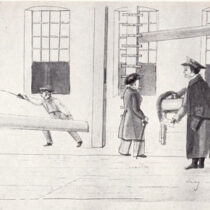 In 1805, Lund University appointed a new fencing master, whose task was to teach students the noble art of fencing. His name was Pehr Henrik Ling, and during his years in Lund he developed new ideas about healthy living.
He had observed that people felt better and became ill less often if they exercised more. By scientifically studying how different body movements affected health, he devised a system of exercises intended to improve human wellbeing. In this way, he laid the foundations of modern gymnastics. At the same time, he developed a method of manipulating muscles to prevent or treat injuries in the body’s soft tissues. And so, massage was born.
Thanks to Ling’s observations during his time in Lund, people around the world have since enjoyed healthier lives. As for his ambitions as a poet, perhaps it is best not to dwell on them. According to Ling himself, his poems worked excellently as sleeping aids!
It’s funny when people trip over!
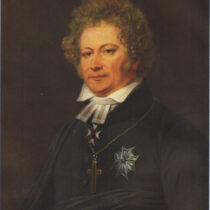 Most people know that Lunds holds a special place in the history of humour. But perhaps its role is even more significant than one might think. Esaias Tegnér, the celebrated poet of the early 19th century, lived in Lund for much of his life.
It was while sitting in his room overlooking Stora Gråbrödersgatan on a winter’s day in 1819 that he wrote the poem “Halkan” (“The Slippery Street”), about how the city’s dignitaries one by one lose face as they slip on the frozen road surface. With barely concealed delight, he describes professors and priests falling flat on their backsides.
In fact, it is difficult to find an earlier example of this kind of slapstick humour in history. Certainly, clowns and jesters had existed long before, but this appears to be one of the earliest examples of the type of physical comedy that would later become common in films and cartoons. Sometimes, simply observing one’s surroundings is enough to make history.
The first opponent of drunk driving
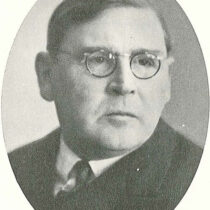 During the early days of motoring, society gradually became aware of the dangers of driving under the influence of alcohol. One of those who realized the problem was the medical researcher Erik Widmark in Lund. In 1922, he presented a method for determining blood alcohol concentration through blood samples. The method was quickly adopted both in Sweden and abroad and became highly significant, not least in securing convictions for drink-driving offences in court cases.
The road traffic sobriety law that came into force in 1934 was based on Widmark’s work. He was also able to demonstrate how rapidly blood alcohol levels rise after only a few drinks, as well as how long the body requires to metabolise and eliminate alcohol.
In 1956, Widmark’s test was replaced by a more effective method, but his work had already played a decisive role in drawing attention to the issue.
Dental health at any cost?
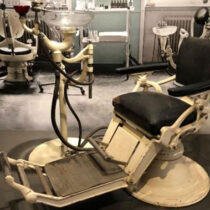 New ideas and innovations are often portrayed as entirely positive, but many have also caused suffering and even claimed human victims. One controversial example is the Vipeholm dental experiments carried out at Vipeholm Hospital in Lund between 1945 and 1955.
In order to determine conclusively what caused tooth decay, large-scale experiments were conducted without consent on patients with intellectual disabilities. The residents were placed on diets including toffees with extremely high sugar content, specially designed to stick to their teeth. Several of the participants were children. Some even vomited from the quantity of “Vipeholm toffees” they were forced to consume every day. The result was countless cases of severe and painful tooth decay. Neither the participants nor their parents had been asked whether they wished to take part in the experiments.
The long-term consequences of the Vipeholm experiments included discoveries that helped lay the foundations for modern dental care. Dental education still makes use of research findings generated by the experiments. Yet posterity unanimously condemns the methods by which these results were achieved.
Can you see inside the body?
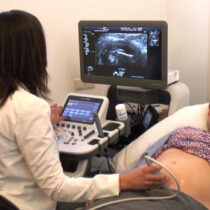 On 29 October 1953, the world’s first echocardiogram of a human heart was performed here in Lund. It was carried out by the biophysicist Hellmuth Hertz, who had developed the potential of ultrasound to monitor the movements of the heart and display them as moving image sequences. Together with the physician, who explored the possibility of using ultrasound in medicine, he helped create a technique that would revolutionise science and healthcare.
This non-invasive ultrasound technology proved valuable not only in cardiology, but also in making it possible to examine other parts of the body – the pelvis, abdomen, brain, eyes, and blood vessels.
Yet for most people, the technology is probably encountered during one particularly life-changing moment: the first time one sees one’s own child.
How about making a really good sausage?
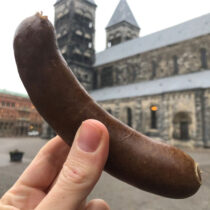 As early as the 19th century, the meat company Borglins began producing so-called knackwurst in Lund. But it was Borglins’ successors at the Holmgrens delicatessen company who eventually developed a truly unique sausage with its own distinctive spice blend and texture – the Lundaknake.
Production began in the 1960s, and the sausage quickly became popular, not least among the city’s
construction workers. At the same time, the large main building of Lund Hospital, known as Blocket, was under construction, and it became a well-established tradition for workers to buy sausages directly from the meat factory and eat them on-site.
Even today, many people from Lund still miss their knake when away from home. Thanks to our gastronomic innovations, food simply tastes a little better here.
How much is “lagom”?
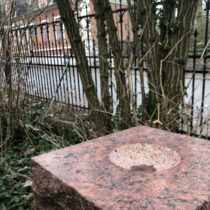 Every Swede is familiar with the concept of lagom – but very few know exactly how much lagom actually is. Except, of course, those of us who live in Lund.
Since 1992, visitors have been able to see the stone monument on Sandgatan that displays the exact dimensions of the unit of measurement known as lagom. It was defined by members of the Uarda Academy – the association of former Lund student revue performers responsible for many delightfully eccentric features of the cityscape – and provides, once and for all, a concrete understanding of this otherwise abstract concept. It demonstrates that a good idea can simply be one that improves everyday life by bringing a smile to people’s faces.
And how much is lagom? Well, it is said to correspond to three shots of schnapps. And that – surely nobody could deny – is precisely lagom.
The city that never sleeps
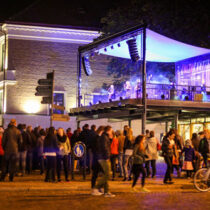 Today, many cities across the Nordic region organise an annual Culture Night. But the very first was the one still held every September in Lund.
It was Gösta John Bredberg, chairman of Lund’s Music and Theatre Committee, who came up with the idea of creating a night-time programme of cultural activities throughout the city. The inspiration came from an unexpected source – the world of sport – with the overnight bandy event in Ljusdal and the orienteering competition Tiomila serving as particular inspirations. “If sporting events can take place at night, why not cultural events as well?”, Bredberg reasoned.
The first Culture Night in Lund took place in 1985. By its tenth anniversary, the event had grown to around 300 programme activities. Today, the number often exceeds 400. The Culture Night continues to be a beloved part of autumn in Lund – all thanks to one spontaneous idea conceived forty years ago.
The Viking king who united the Nordics – and our hardware
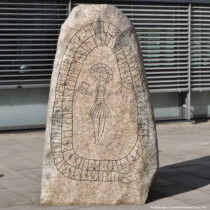 In the 1990s, Ericsson Mobile launched a project that led to a smart idea – enabling electronic devices to
communicate wirelessly with one another. It quickly became a major development in the technology world, with part of the work built upon expertise in microelectronics and communications developed at Lund University.
One of the key figures behind the technology was Sven Mattisson, who had completed his doctorate in Lund before being recruited by Ericsson. When the technology was launched in 1998, it was given the name Bluetooth. The inspiration came from the Viking king Harald Blåtand, who united Denmark and Norway under one ruler. Today, he continues to “unite” our electronic devices.
Harald Bluetooth was the father of Sven Tveskägg, another innovator featured elsewhere in this exhibition. In Lund, we are ahead of our time – while simultaneously remaining part of the past.